

As a parent, you know that every little thing you bring into your child’s world is chosen with love. An alphabet chart is so much more than just a colourful decoration; it’s a foundational learning tool that actually grows with your child. Think of it as a silent, friendly teacher, making letters a familiar and comforting part of your little one's world right from the very beginning.
More Than Decor: How an Alphabet Chart Sparks Learning
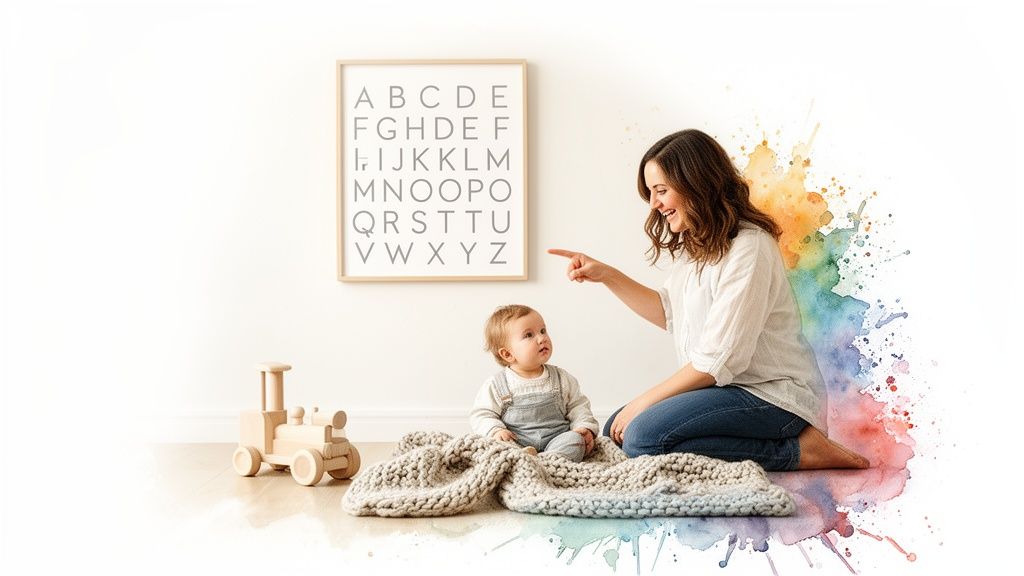
When you're putting together a nurturing space for your child, every choice feels huge. From the colour on the walls to the softness of the rug, you’re carefully building their first little world. An alphabet chart fits right into this, acting as both a stylish piece of art and a powerful gateway to learning.
It works its magic through constant, gentle exposure. Long before your child can even speak, their eyes are taking in the shapes and patterns of the letters. This kind of passive learning builds a sense of familiarity, so when it's time to actually learn the ABCs, the letters already feel like old friends.
The Foundation of Early Literacy
In the UK, early years education really values alphabet charts for kids. They're seen as key tools for helping toddlers get to grips with the 26 letters, building a solid base for reading and writing before school even starts. In fact, visual aids like these can boost letter identification by 20-30% in under-fives.
This early exposure is a simple yet brilliant way to give your child a head start, making the jump to reading a much smoother, more confident experience.
An alphabet chart isn’t just about memorising letters; it’s about sparking curiosity. It invites conversation, turning a simple 'A is for apple' into a lovely moment of connection and discovery between you and your child.
For families navigating different learning paths, visual tools can be especially powerful. Our guide on supporting children with learning differences offers more ideas for creating an encouraging educational space at home.
Alongside wall charts, other hands-on aids like engaging ABC foam mats can also play a huge part in building those early literacy skills. When it comes down to it, choosing a chart you both love turns a simple purchase into a meaningful investment in your child's future.
The Everyday Magic of Alphabet Charts for Kids
It’s funny how something as simple as a poster can have such a big impact. An alphabet chart is a perfect example of this, quietly working in the background to build your child's confidence and skills every single day. Its real power is in making learning a natural part of their environment.
Just by being on the wall, the chart encourages passive learning. Your child starts to absorb the shapes of letters and the order of the alphabet without even trying, much like they pick up the words to a favourite nursery rhyme. There’s no pressure or formal lesson needed; the information just becomes familiar through daily glances.
This constant, gentle exposure is the first step towards proper letter recognition. Before you know it, those abstract shapes will start to have meaning, laying the groundwork for reading and writing in a completely fun, stress-free way.
From Letters to Language
That leap from seeing a letter to understanding its sound is a huge one for a little person, and alphabet charts are the perfect bridge. Each picture, from 'A is for Apple' to 'Z is for Zebra', creates a strong link in their mind. When your child sees the letter 'B' next to a bear, their brain forges a connection that helps the sound stick.
This process does more than just teach the ABCs; it actively expands your child's vocabulary. You’ll find yourself pointing to the pictures, naming the objects, and sparking little conversations. These moments build their word bank and strengthen their communication skills, one letter at a time.
Think of an alphabet chart as a visual dictionary for your little one. It turns abstract letters into real, concrete ideas, turning learning into a game of discovery that builds both knowledge and confidence.
A Tool for Connection and Cognitive Growth
Beyond the academics, an alphabet chart is a wonderful excuse to spend quality time together. Tracing the letters with tiny fingers, singing the alphabet song while pointing along, or playing a quick game of 'I spy' creates precious bonding moments. These simple interactions make learning feel like play, helping them develop a positive attitude towards school from the very beginning.
These playful activities also give your child’s brain a fantastic workout. They boost critical thinking skills such as:
- Memory and Recall: Asking "Where is the cat?" encourages them to remember and find specific pictures and letters.
- Pattern Recognition: The simple grid format helps children understand sequence and order, a key pre-reading skill.
- Problem-Solving: Questions like "What sound does this letter make?" invite them to think and apply what they’ve learned.
By bringing one of these charts into your home, you're not just adding a piece of art; you're creating a richer learning environment. For more ideas on using wall art to create a beautiful and stimulating space, have a look at our guide to children's wall decor. An alphabet chart truly is an investment in your child’s bright future.
Finding a Chart That Complements Your Nursery Style
Choosing an alphabet chart is one of those lovely opportunities to mix learning with a whole lot of love. You're not just picking out a teaching tool; you're finding a piece that brings joy to your child's very first room, one that feels like it was always meant to be there.
The perfect chart should feel like a natural part of the space you’ve so carefully created. It has the power to tie the whole theme together while standing out as a beautiful focal point. It's that sweet spot where education and aesthetics meet, a piece of functional art that adds warmth and personality to the walls.
Matching a Chart to Your Nursery Theme
Every nursery tells its own little story, and the right wall art really helps to bring that story to life. Whether you've gone for a calming, minimalist vibe or a room that’s bursting with playful energy, there’s an alphabet chart that will fit right in.
For example, a room filled with soft, natural textures is the perfect home for our whimsical 'Baby Animals' chart. It just enhances that gentle, nature-inspired atmosphere. On the other hand, if your space is all about bright colours and fun, a vibrant print like the 'Watercolour Vehicles' adds a brilliant splash of playful charm. The trick is to see the chart not just as a poster, but as a key decorative piece that supports your vision. For more ideas on curating your space, have a look at our guide on creating stunning nursery wall art.
The Importance of Design Details
Beyond the overall theme, it’s the little details that make a huge difference in how well an alphabet chart actually works. The font, the illustrations, and the colour palette all play a huge part in making learning feel both easy and fun for your little one.
- Child-Friendly Fonts: Look for clear, simple letter shapes that are easy for young eyes to recognise. It's best to avoid overly fancy or cursive styles that might just confuse a beginner.
- Captivating Illustrations: The pictures are what truly bring the alphabet to life! Engaging, sweet, and instantly identifiable images create that all-important link between a letter and its sound.
- Stimulating Colour Palettes: Colours should be visually appealing without being overwhelming. A well-balanced palette can be both soothing and stimulating, grabbing your child's attention without over-exciting them at bedtime.
Choosing the right alphabet chart is like picking the perfect accessory for an outfit—it should complement the main theme while adding its own unique spark. It’s an investment in both your nursery’s style and your child’s early education.
As you think about how a chart will fit with your decor, it can be really helpful to get a bit of inspiration from the experts. This guide offers some wonderful, practical tips on designing a modern and stylish nursery. By carefully choosing a chart that nails that balance between style and function, you're creating a cherished centrepiece that will be part of your family’s memories for years to come.
How to Choose the Right Size and Placement
So, you’ve found an alphabet chart that perfectly captures the style of your nursery. Wonderful! Now, let’s talk about making sure it gets seen and loved. Choosing the right size and where to hang it can be the difference between a nice print and an incredible learning tool that becomes part of your child’s daily world.
Think of it like hanging a favourite family photo – you want it somewhere it will be cherished and noticed every day. When you place an alphabet chart thoughtfully, it stops being just decoration and starts being an interactive part of the room. It’s all about finding that sweet spot where it looks just right and is perfectly positioned for little eyes and curious minds.
Finding the Perfect Size
First things first, let’s pick a size that feels balanced in the space. A chart that’s too small can easily get lost on a big wall, but one that’s too large might overwhelm the room. Have a look at the scale of the room and the furniture around where you plan to hang it.
A large A2 print, for example, makes a brilliant statement piece above a cot or changing table. It naturally draws the eye and becomes a beautiful focal point. On the other hand, smaller A4 or A3 prints are fantastic for creating a gallery wall. You can mix and match them with other prints from our Pompom Prints collections to build a cohesive, personal display. If you're thinking of a gallery wall, exploring ideas for custom framed pictures can really help tie everything together beautifully.
This visual guide shows just how easily different alphabet chart styles can slot into popular nursery themes.
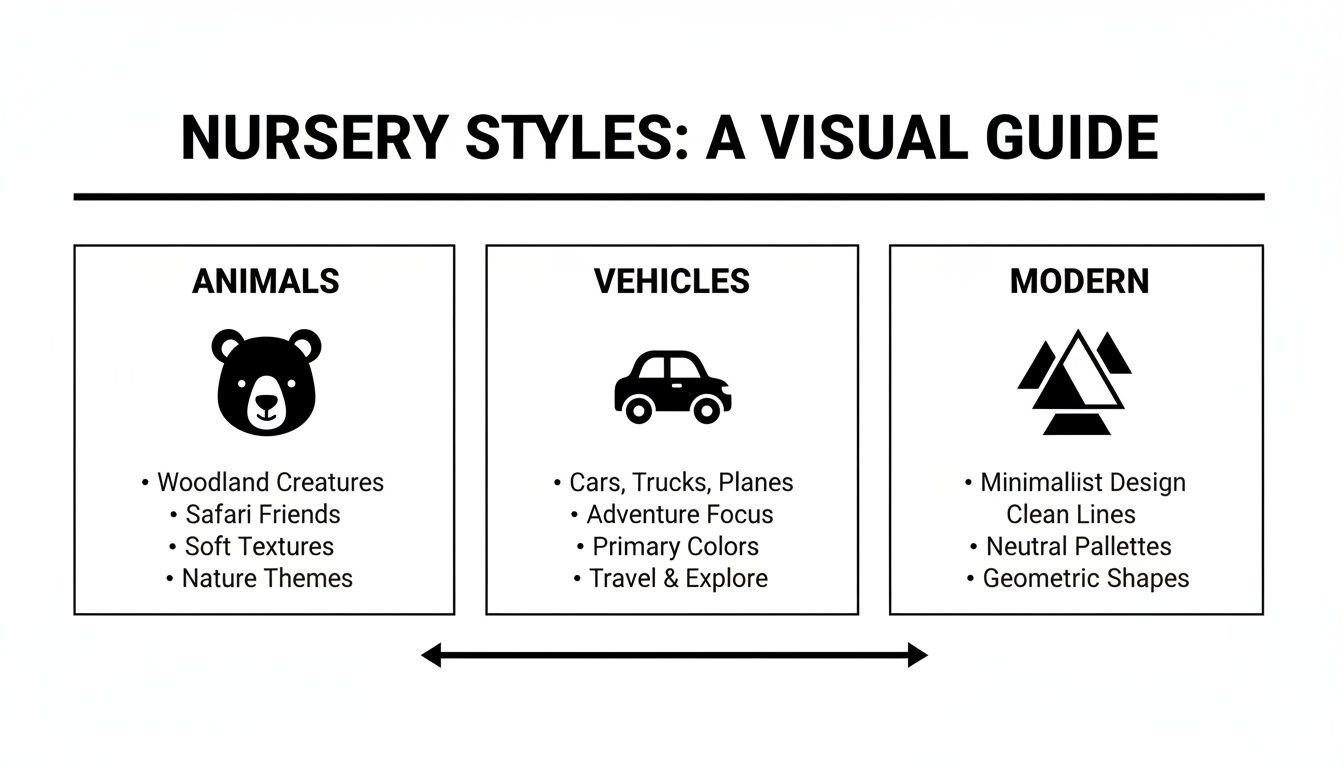
The key takeaway here is simple: whether your theme is playful animals, cool modern geometrics, or colourful vehicles, there’s a design that will fit right in.
Smart Placement for Maximum Impact
Where you decide to hang your alphabet chart is just as important as the design itself. The goal is to put it somewhere your child will see and interact with it naturally and often.
Here are a few spots that work wonders:
- Near the Changing Table: This is a fantastic spot for babies. It gives them something colourful and engaging to look at during nappy changes, which can make the whole process a little smoother for everyone involved.
- In a Cosy Reading Nook: Tucking the chart next to a bookshelf creates a lovely, natural link between letters and the stories you read together. You can point to the letters on the chart as they pop up in their favourite books, gently reinforcing what they're learning.
- At Eye Level in the Playroom: For toddlers on the move, hanging the chart at their eye level is a game-changer. It invites them to walk right up, point at the letters, and touch the pictures, turning learning into a fun, hands-on activity they can lead themselves.
To make it even easier, here's a quick reference table to help you decide on the perfect size and spot for your chart.
Alphabet Chart Size and Placement Guide
| Room Type | Recommended Size (Pompom Prints) | Ideal Placement | Parenting Pro-Tip |
|---|---|---|---|
| Nursery | A2 (Statement Piece) or A3 (Gallery Wall) | Above the cot or next to the changing table. | Use it as a focal point during nappy changes or quiet time to build early letter recognition. |
| Playroom | A2 or A3 | At the child's eye level, in a dedicated play or art area. | Make it interactive! Point to letters when playing or drawing to connect them to real-world objects. |
| Toddler's Bedroom | A3 or A4 | Near a bookshelf in a reading nook or as part of a calming gallery wall. | Before bed, spend a minute or two "finding" letters from the day, like 'B' for 'bath' or 'P' for 'pyjamas'. |
Ultimately, finding the right place is all about making the alphabet chart a seamless part of your child’s environment. It becomes more than something they just look at; it’s something they live with, learn from, and grow alongside every single day.
Creating a Thoughtful and Personalised Gift
Trying to find that perfect present for a new baby, a christening, or a first birthday can feel like a real mission. You want to give something special, something from the heart that won’t be cast aside or outgrown in a few months. This is where an alphabet chart really shines.
Gifting an alphabet chart is a truly thoughtful gesture because it's an investment in a child’s future. Toys are fantastic, of course, but a piece of educational art works its magic every single day. It’s a gift that manages to be both stylish and genuinely meaningful, showing you care about their learning journey right from the very beginning.
This kind of present tells a story. It’s a lasting keepsake that will hang on their wall as they grow, becoming a beautiful backdrop to their childhood memories. For grandparents, family, and friends, it’s a wonderful way to give something that makes a real difference.
Making It Uniquely Theirs
To make your gift even more memorable, why not pair one of our alphabet charts for kids with a personalised name print? This creates a gorgeous, one-of-a-kind set that celebrates the child’s own identity while helping them learn. Just imagine their delight when they’re old enough to spot the first letter of their name on the chart.
This personal touch transforms a lovely gift into something truly cherished. It becomes a focal point in their nursery or bedroom, a constant reminder of the special person who chose it just for them. For more ideas, have a look at our guide to creating beautiful personalised nursery wall art.
Gifting an alphabet chart combined with a name print isn't just giving a present; it's giving a piece of their story. It’s a beautiful, educational keepsake that marks the beginning of their adventures in learning.
A Seamless Gifting Experience
We believe giving a beautiful gift should be just as joyful as receiving one. At Pompom Prints, we make sure every little detail is taken care of, so your present arrives looking perfect and ready to make someone’s day.
- Quality Packaging: Every print is carefully packaged to make sure it arrives in pristine condition, creating a wonderful first impression.
- Fast, Free UK Delivery: We offer free Royal Mail first-class shipping on all orders within the UK, so your thoughtful gift gets there quickly without any extra cost to you.
Choosing a Pompom Prints alphabet chart as a gift means you're giving something unique, stylish, and full of heart. It’s a simple way to show your love and support for the little one in your life.
A Little Love Goes a Long Way: Buying and Caring for Your Prints
You’ve found the perfect piece of art for your little one’s room, and we want you to love it for years to come. With just a little bit of care, your new print will stay bright and beautiful, becoming a cherished part of their childhood memories.
The main thing to keep an eye on is direct sunlight. Just like our own skin, the gorgeous inks on a print can fade if they get too much sun. A simple fix is to hang your alphabet chart on a wall that isn’t hit by strong, direct sun for hours on end. If you’re popping it in a frame, choosing one with UV-protective glass is a brilliant extra layer of defence to keep those colours looking box-fresh.
What’s the Pompom Prints Difference?
When you choose a print from us, you're not just getting a poster. You’re bringing home a piece of art that’s been designed with so much love and a real commitment to quality. We truly believe that what you hang on your child’s walls matters, and that belief is poured into every single thing we create.
It all starts with our materials. Every design is printed on premium, sustainably sourced paper. This gives you a beautiful, professional finish that feels lovely and substantial, plus it’s a bit kinder to our planet. It's a small detail, but it makes a huge difference to how the final piece looks and feels.
Every single design in our shop is created by us, right here in-house. That means you’re getting something genuinely unique that you won’t find anywhere else. Our passion is creating art that makes children’s spaces feel special, personal, and full of character.
A Shopping Experience Made for You
Life with kids is hectic, we get it! That’s why we’ve made buying your favourite prints as easy and flexible as we possibly can. We’ve got a range of options to suit every need, timeframe, and budget.
- Digital Downloads: Perfect if you need something in a hurry or want the freedom to print it yourself in a specific size.
- Printed For You: Let us handle the hard work. We’ll print it for you for a flawless, professional finish and deliver it straight to your door.
- Professionally Framed: For the ultimate easy button, choose to have your print framed by us. It’ll arrive ready to hang the moment you unbox it.
We take so much pride in our service. Every order is carefully packaged up and sent out quickly, usually the same or the very next day. And to make things even better, we offer free Royal Mail first-class shipping right across the UK, so your beautiful new wall art will be with you in a flash.
A Few Common Questions Parents Ask About Alphabet Charts
Stepping into the world of early learning tools can feel a little overwhelming, and you're bound to have a few questions. As a parent, you want to know you're making the best choices for your little one. We get it! So, let's clear up some of the most common queries we hear about alphabet charts.
At What Age Should I Introduce an Alphabet Chart?
Honestly, you can pop a chart on the wall right from birth. The gentle colours and high-contrast visuals are wonderfully stimulating for a newborn's developing eyesight. It becomes a familiar, comforting part of their world from day one.
You’ll probably notice your toddler starting to point at the pictures around 18 months – the first little sign that they're actively engaging with it. The real sweet spot for learning, though, is typically between the ages of two and five. This is when the chart becomes a fantastic partner in building the letter and sound recognition skills they'll need for preschool. It’s a lovely tool that truly grows with them.
Are Charts With Pictures Better Than Just Letters?
For young children, the answer is a big, resounding yes! Alphabet charts that pair letters with pictures are far more effective because those illustrations create a strong, memorable link between a letter’s shape and its sound.
Think 'B for Bear' or 'S for Snake'. Those connections help the information stick in a way that plain, abstract letters simply can't for a little one. While a simple, letter-only chart might be useful for older kids, fun and engaging pictures are absolutely key to capturing a younger child's attention and making learning feel like a delightful game.
What Are Some Fun Ways to Use the Chart?
The most important thing is to keep it playful and completely pressure-free. This should be a happy, bonding moment, not a test!
- Gently sing the alphabet song while pointing to each letter on the chart together.
- Ask your child if they can find the very first letter of their own name, or maybe a pet’s name.
- Play a simple game of ‘I spy’ using the illustrations ("I spy something that starts with the 'sss' sound... a Snake!").
Short, happy interactions are the secret sauce. They build a positive and lasting love of learning, one little letter at a time.
Ready to find the perfect piece of educational art for your little one's space? Explore the full collection of beautiful and engaging alphabet charts at Pompom Prints and discover a design that you and your child will adore for years to come. Visit us at https://pompomprints.com to get started.