

When you're thinking about decorating your child's room, the best ideas strike a balance between their current passions and a design that won’t feel dated in a year. The trick is to go for a flexible theme, choose furniture that can adapt as they grow, and use easy wins like wall art and textiles to show off their budding personality.
Creating a Room That Can Evolve
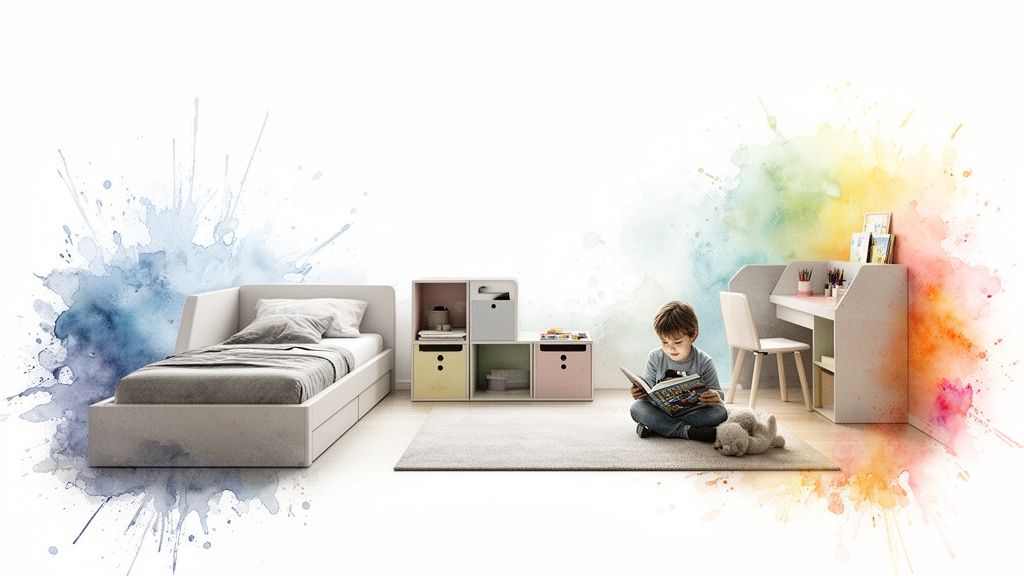
Before you even think about picking up a paintbrush, it’s worth thinking long-term. Children’s interests change at lightning speed; the dinosaur obsession that’s all-consuming today could be ancient history by next year, replaced with a fascination for outer space. The real goal is to design a room that can move with these phases without needing a complete (and expensive) overhaul every time.
This forward-thinking approach will save you a world of time, money, and stress down the line. By starting with a durable, neutral foundation, you’re creating a canvas that you can easily update with new personality whenever the mood strikes. Think of it as investing in the "bones" of the room—the core bits that will stand the test of time.
Plan for Function and Flexibility
A child's room wears many hats. It needs to be a peaceful sanctuary for sleep, a fun space for play, and an inspiring corner for learning. Even in the smallest of rooms, you can carve out these distinct zones with some clever layout choices.
- Sleep Zone: Try to position the bed in a quieter corner, away from the hustle and bustle of the doorway, to create a cosy, restful nook.
- Play Zone: A soft rug in the middle of the floor works wonders for defining the main play area. It keeps the toys (mostly) contained and gives them a comfy spot to spread out.
- Study Zone: As they get older, a small desk and chair become non-negotiable. Placing it near a window for natural light is perfect for homework, drawing, and all their creative projects.
This simple zoning strategy helps keep things organised and functional. It also gives your child clear cues about where different activities happen, which can make the dreaded tidy-up time just a little bit easier.
The secret to a room with staying power is prioritising flexibility. Invest in classic furniture and neutral walls, then let accessories like artwork, bedding, and cushions tell the story of who your child is right now.
Invest in Core Pieces That Last
When you're choosing furniture, look for pieces that can grow with your child. A convertible cot that turns into a toddler bed is a fantastic first purchase. In the same way, a simple, timeless chest of drawers will see them right through to their teen years, unlike that race-car bed they’re begging for now.
For the walls, a more minimalist approach can have surprising longevity. Looking into the principles of Scandinavian wall art, for instance, can give you some great ideas for a calm, stylish backdrop that won’t feel dated. These core pieces create that solid foundation you can build on for years to come.
Choosing Timeless Themes and Colours
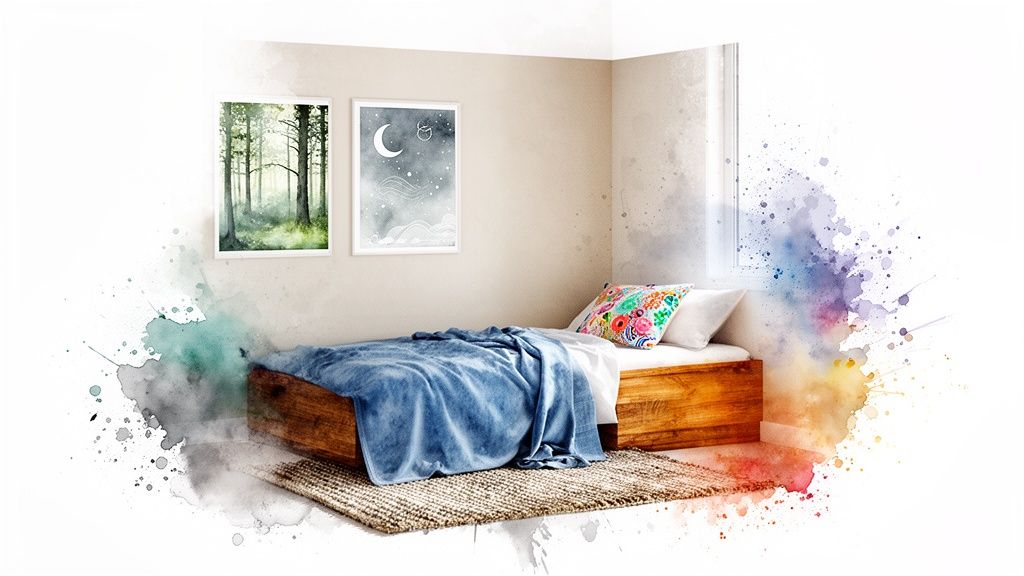
We’ve all been there. Your little one is completely obsessed with the latest cartoon character, and it’s tempting to go all-in. But as any experienced parent knows, today’s favourite hero can become yesterday’s news in a flash.
The secret to a design you’ll both love for years is to think bigger. Choose a timeless theme that sparks their imagination without being tied to a specific show. Instead of focusing on one character, think about the world they live in. A love for a jungle film, for instance, can easily become a gorgeous safari or woodland adventure theme, filled with charming animal prints and earthy, calming tones.
This approach lets you capture what they love right now, but in a way that’s stylish and has room to grow with them.
Build a Versatile Colour Palette
The smartest way to create a lasting colour scheme is to start with a calm, neutral base. Think soft whites, gentle greys, or warm beige on the walls. This creates a versatile backdrop that lets you add personality without committing to a full re-paint every few years.
A neutral room is anything but boring! It's your canvas. With that foundation in place, you can bring in pops of your child’s favourite colours through accessories.
- Bedding: A vibrant duvet cover or a few playful cushions can completely change the feel of the room.
- Rugs: A brightly coloured or patterned rug is perfect for anchoring the space while adding warmth and comfort.
- Artwork: A curated gallery wall is a brilliant way to tie your whole colour scheme together.
The best part? As your child's tastes evolve, you just swap out the cushions or update a few prints. It’s a simple, budget-friendly way to keep their room feeling fresh.
A timeless theme isn't about ignoring what your child loves today. It's about translating that passion into a broader concept—like 'adventure' instead of a specific pirate, or 'nature' instead of a particular animated animal—that leaves room for their imagination to grow.
Let Wall Art Tell the Story
Wall art is your best friend for bringing a theme to life in a sophisticated way. Instead of a floor-to-ceiling mural they might outgrow, a collection of curated prints can tell a story and create a beautiful focal point.
It's a popular approach for a reason. In the UK, many parents are creating calming, characterful nurseries with nature-inspired prints and soft pastels. Biophilic designs, especially those with woodland animals and botanicals, are a top choice for fostering that early connection to the outdoors.
Imagine a cosmic exploration theme, brought to life with watercolour planets, vintage-style rockets, and a personalised star map. Or a gentle coastal scene, created with prints of sailboats and charming sea creatures. These collections feel personal and cohesive without being overwhelming.
For a touch of nostalgia, you could even explore our guide on how to incorporate vintage print art for a classic feel that truly never goes out of style. Thoughtfully chosen art ensures the room reflects your child's spirit while maintaining a design you'll both adore for years to come.
Smart Furniture and Storage for Growing Kids
A well-organised room is a happy room. It’s the perfect canvas for creativity and play, but getting it right means choosing furniture that’s more than just stylish. We need pieces that are safe, smart, and can actually keep up with your rapidly growing little one.
The real goal is to find furniture that works as hard as you do. Think of multifunctional items as your secret weapon in the constant fight against clutter. They help you reclaim precious floor space for all those important imaginary adventures.
Choose Furniture That Does Double Duty
Look for pieces that can adapt over time. A convertible cot that transforms into a toddler bed is a brilliant investment, saving you from another big purchase in just a couple of years. In the same way, a changing table with removable rails can later become a stylish chest of drawers that will see them through their school days.
An adjustable-height desk is another fantastic choice. It can start low to the ground as an arts and crafts table for your preschooler, then rise with them to become a proper homework station. That's years of use out of a single, clever piece.
Empower Kids with Accessible Storage
One of the best ways to keep a room tidy is to make it ridiculously easy for your child to help out. When storage solutions are at their level, they feel empowered to put things away themselves. It turns tidying up from a battle into a manageable task.
- Low-Profile Cubbies: These are perfect for stashing toys, games, and books where little hands can easily reach them.
- Whimsical Bins: Canvas or fabric bins in fun shapes and colours can make putting things away feel more like a game.
- Wall-Mounted Shelves: Placing a few ledges at a lower height creates an irresistible 'read-me' library, displaying their favourite book covers like little works of art.
By making storage accessible and fun, you’re not just organising a room; you’re teaching your child valuable life skills about looking after their own space. It gives them a real sense of ownership and pride in their environment.
This approach works wonders for more than just toys. To help manage their ever-growing wardrobe, a dedicated guide on organizing kids' clothes in their closet can be a lifesaver, offering practical systems that even younger children can help with.
These strategies are particularly effective when creating calm, organised spaces. For more inspiration, have a look at our guide to gender-neutral kids bedroom ideas. By focusing on smart, scalable furniture and clever storage, you create a clutter-free environment where their imagination has plenty of room to run wild.
Designing a Personalised Gallery Wall
A gallery wall is so much more than just pictures. Think of it as a dedicated space to tell your child's story—a place to show off their personality, passions, and dreams. While it might sound like a big undertaking, it’s actually a wonderfully simple way to create a stunning focal point that makes the whole room feel special and uniquely theirs.
The trick is to bring together a collection of prints that feel harmonious without being too matchy-matchy. With a few simple tips for mixing sizes, frames, and layouts, you can pull together a dynamic display that looks professionally curated but is full of personal heart.
Finding the Perfect Spot and Layout
First things first, you need to choose your canvas. The wall above a bed or a chest of drawers is often a perfect candidate, as it helps to anchor the furniture and naturally draws the eye. But don't overlook smaller or awkward walls! A well-placed gallery wall can bring purpose and personality to a forgotten corner.
Once you’ve picked your spot, it's time to plan the layout. This is the fun part where you get to play creative director without making a single nail hole.
- Trace and Test: Grab some paper (wrapping paper or newspaper works well), trace each frame, and cut out the shapes. Use a bit of masking tape to arrange them on the wall.
- Play with Arrangements: Move the paper templates around. Try a neat grid, a more playful and scattered cluster, or a simple linear design. Step back and see what feels right.
- Keep Your Spacing Consistent: Aim for a gap of about 5-8 cm between each frame. This little detail is what makes a collection of different prints look clean and cohesive.
This paper-template method is a game-changer. It lets you see exactly what the final result will look like before you even think about picking up a hammer.
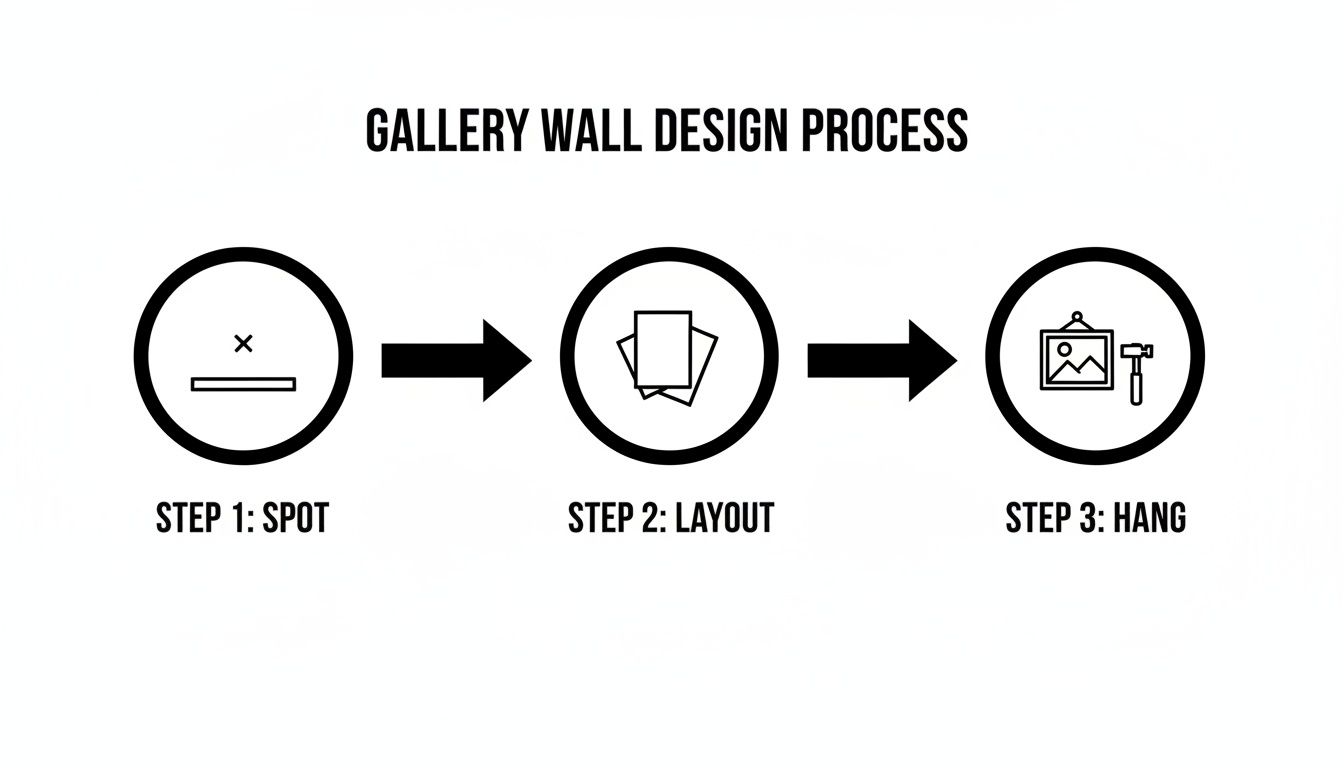
Breaking it down into three simple stages—spot, layout, hang—makes the whole project feel completely manageable.
Curation and Personalisation
A truly great gallery wall feels collected over time, not just decorated in an afternoon. The secret is to choose a mix of art that feels connected, whether through its colour palette, theme, or overall style. You could easily blend a simple line drawing with a soft watercolour illustration and a bold typographic print.
Decorating children’s rooms has become a huge part of the UK’s home décor boom, with wall art right at the centre of it all. In fact, the UK wall art market generated around £2.9 billion in 2022 and is expected to hit nearly £4.4 billion by 2030. Thanks to the rise of online boutiques, it's never been easier for parents to find curated print sets and personalised art, which explains why themed gallery walls are so popular.
The real magic of a gallery wall is in the story it tells. Mix a favourite animal print with an abstract piece that picks up one of its colours, and then finish with a personalised name print. It's this blend of personal and artistic touches that makes it uniquely theirs.
For that extra special touch, make one of the prints a personalised name or initial. This instantly claims the space for your child and creates a beautiful centrepiece for the rest of the collection to revolve around. If you’re looking for ideas on how to make your art pop, our guide to custom framed pictures has some brilliant tips.
This focus on crafting a personal feature is what ties the whole room together, creating a space that feels thoughtful and full of love.
Simple Gallery Wall Layouts
To help get you started, here are a few classic, no-fuss layouts that work beautifully in children's rooms.
| Layout Style | Best For | Expert Tip |
|---|---|---|
| The Grid | Creating a clean, formal, and symmetrical look. Works best with frames of the same size. | Use a spirit level and measuring tape for perfect alignment. Even a small error will stand out. |
| The Cluster | A playful, eclectic, and organic feel. Great for mixing different frame sizes, shapes, and styles. | Start with your largest piece in the centre and build outwards with smaller frames. |
| The Linear Stack | A minimalist and ordered look, arranged either vertically or horizontally. Ideal for narrow walls or above long furniture. | Keep the spacing between frames identical. This creates a strong, intentional line. |
| The Ascending Staircase | Following the angle of a staircase. Perfect for adding personality to a functional space. | Use the bottom corner of each frame as your guide, aligning it with an imaginary diagonal line that follows the stairs. |
These layouts are just starting points, so feel free to adapt them or mix elements to create something that feels just right for your space.
Adding Personality with Finishing Touches
This is where the magic really happens. The final details are what take a room from just being ‘done’ to being truly loved. It’s the stage where you layer in all the charm and personality, turning the space into a cosy sanctuary that feels completely like your child's own. And the best part? These finishing touches often make the biggest impact without blowing the budget.
It’s all about those thoughtful, low-cost elements that make a room feel complete and full of warmth. A simple coat of paint on a second-hand dresser or a shelf displaying their favourite treasures can bring far more character than any expensive piece of furniture ever could.
Weave in Warmth with Textiles
Textiles are a fantastic, budget-friendly way to inject colour, pattern, and texture. A playful rug can instantly map out a play area while adding a soft layer underfoot. Themed bedding can bring a whole concept to life practically overnight.
And never underestimate the power of cushions! Piling a few in different shapes, sizes, and fabrics on the bed or in a reading nook creates an irresistible spot for snuggling up with a book. These are all so easy to swap out as your child's tastes change, keeping the room fresh and exciting down the line.
The most successful decorating ideas for a child's room often come from the smallest details. A special blanket, a fun lamp, or a piece of their own artwork are the things that tell a story and make their space feel like home.
Create Magic with Lighting
Lighting can completely transform the atmosphere of a room. Looking beyond the main ceiling light allows you to create different moods for playtime, reading, and winding down for bed. A fun, characterful bedside lamp, for instance, provides a comforting glow perfect for story time.
For a truly magical touch, try stringing some fairy lights around a bed frame or along a bookshelf. They create a dreamy, whimsical feel that children absolutely adore. For a soothing and captivating visual, you might also consider incorporating a fibre optic lamp, which is great for building a calming sensory space for quiet moments.
Embrace Budget-Friendly DIY and Decals
You don’t need a huge budget to add features that pack a punch. Upcycling an old chest of drawers or a small table with a fresh coat of bold, fun paint can create a unique statement piece for a fraction of what it would cost to buy new.
Removable wall decals are another brilliant, commitment-free idea. They come in countless designs—from woodland animals to planets and stars—and can create an incredible feature wall in just a few minutes. When your child is ready for a change, they simply peel off without damaging the paint underneath. These personal details, combined with curated artwork, truly make a room special. Our guide on choosing personalised nursery wall art can offer more inspiration for making their walls unique.
Common Questions From Parents
Decorating your child's room is such an exciting project, but it’s completely normal for it to bring up a lot of questions. From making a tiny box room feel grand to choosing a theme they won't outgrow in five minutes, it helps to have some clear advice.
Here, we tackle some of the most common queries we get, helping you feel confident as you create their special space.
How Can I Decorate a Small Room to Feel Bigger?
The absolute key to decorating a small child's room is to think vertically. You want to draw the eye upwards. Tall, narrow bookshelves and clever wall-mounted storage are brilliant for this, as they keep the floor clear for what matters most: play.
Light paint colours are your best friend here. Soft whites, pale greys, and gentle pastels reflect light beautifully, making any room feel more airy and open. Also, don't underestimate the power of a large mirror; when placed thoughtfully, it can create a wonderful illusion of depth.
To really get the most out of your space, multi-functional furniture is a game-changer.
- A bed with built-in drawers often means you can skip a separate chest of drawers entirely.
- An ottoman with hidden storage can double as a seat and a handy toy box.
- A well-arranged gallery wall adds tonnes of personality without taking up a single inch of floor space.
These simple ideas show that even the most compact rooms can be packed with style and function.
What Are the Best Themes for a Gender-Neutral Room?
Gender-neutral themes are fantastic because they're often timeless and appeal to a huge range of personalities. A calming Scandinavian look is always a popular choice. It focuses on minimalist animal prints, clean lines, and natural wood tones for a wonderfully serene feel.
Another much-loved option is a woodland or forest theme. Gentle illustrations of foxes, bears, and trees create a charming, storybook atmosphere that really sparks the imagination.
A great gender-neutral theme is one that focuses on wonder and adventure rather than specific characters or colours. Think about concepts like exploration, nature, or creativity, which leave plenty of room for your child’s personality to shine through as they grow.
Other wonderful ideas include:
- A celestial theme with soft watercolours of stars, moons, and planets.
- An adventure or travel theme featuring stylised maps and mountains.
- A simple geometric theme using a mix of shapes in a soft, coordinated colour palette.
How Often Should I Update My Child's Room?
There’s no hard and fast rule here, but a great strategy is to create a timeless foundation that can last for years. If you invest in good-quality core furniture and a versatile wall colour, you've done most of the hard work.
Then, you can simply update the smaller, less expensive elements every 2-3 years or whenever your child's interests shift. Accessories are where you can really have fun and reflect their current passions. Swapping out things like bedding, cushions, rugs, and wall art is incredibly easy.
A gallery wall is particularly flexible. You can just switch out a few prints from a collection to instantly refresh the room's theme without the effort of a complete redecoration. For more specific questions about our print collections or customisation options, you can always find answers on our frequently asked questions page.
At Pompom Prints, we believe creating a beautiful, personal space for your child should be simple and joyful. Discover our curated collections of timeless wall art, from personalised name prints to charming animal illustrations, and find the perfect finishing touches for the room they'll love for years to come. Explore the full collection at https://pompomprints.com.