

Before you even think about paint swatches or adorable animal prints, the secret to a stress-free nursery project is taking a moment to map everything out. Whether this is your first baby or you're a seasoned pro, it’s so easy to get carried away by the excitement. A little bit of planning now will save you from headaches later and help you create a room that’s as practical as it is beautiful.
Crafting Your Perfect Nursery Blueprint
Think of this first step as turning those dreamy Pinterest boards into a real, actionable plan. You’re going to be spending a lot of time in this room—from quiet morning cuddles to challenging 3 AM feeds—so it needs to be a space that works for you, your new baby, and the rest of the family.
Balancing Dreams with Daily Realities
First up, how do you want the room to feel? Are you picturing a calm, serene oasis filled with soft, neutral colours, or something more playful and vibrant? This feeling will be your north star for every decision that follows.
Now, let's mix that vision with a dose of reality. A gorgeous nursery is lovely, but a functional one is non-negotiable. Think about the day-to-day tasks: changing nappies, feeding, dressing, and soothing your little one. Your design needs to make these routines smoother, not more complicated—especially if you have another little one demanding your attention!
- Create Zones: It helps to mentally divide the room into areas for sleeping, changing, and feeding. This creates a natural flow and keeps essentials right where you need them.
- Prioritise Comfort: A comfy feeding chair isn't just a nice-to-have; it's a must for those long nights. If you’ve been through this before, you know this is one piece that’s worth investing in.
- Think Long-Term: Look for furniture that can grow with your child. A chest of drawers that can double up as a changing table is a brilliant way to get more value and use out of your purchase.
Visualise Your Vision with a Mood Board
A mood board is your best friend during this stage. It doesn't have to be anything fancy – a private Pinterest board or a simple collage using a tool like Canva is perfect. The idea is to collect images, colours, textures, and products that capture the look you’re going for.
This simple step is a lifesaver for making cohesive choices. When you’re in a shop wondering if that rug will go with the curtains you love, you can just pull up your mood board. It keeps you on track and helps you avoid those costly impulse buys that just don't fit.
Your nursery mood board isn't just a collection of pretty pictures. It's a practical tool that turns your feelings and ideas into a solid design plan, making sure every choice works together harmoniously.
Setting a Smart and Realistic Budget
You absolutely do not need to break the bank to create a beautiful nursery. Setting a budget early on is key to spending your money wisely. Creating special spaces for little ones is a growing passion for parents. In fact, the UK kids' furniture market hit USD 2.01 billion in 2023 and is set to grow even more, which shows just how much we love to invest in these rooms. You can learn more about the UK kids' furniture market trends and see what's driving this growth.
Here’s a simple way to think about your budget:
- Splurge: Spend a bit more on items where safety and durability are most important. A high-quality, safe cot and a comfortable, sturdy glider are two great places to allocate a bigger chunk of your budget.
- Save: This is where you can get creative! Decor like wall art, cushions, and storage baskets are all areas where you can find really stylish and affordable options that make a huge impact without the hefty price tag.
Choosing a Theme and Colour Palette
With your blueprint sorted, we get to the really fun part—infusing the nursery with personality. Choosing a theme and colour palette is all about creating a feeling; a gentle, welcoming space for your baby and a calming sanctuary for you.
This is your chance to move beyond the traditional pinks and blues if you want to. Modern nurseries have really embraced sophisticated, timeless themes that can easily grow with your child, or even be passed down to a younger sibling later. Just picture it: a whimsical woodland escape, a gentle safari adventure, or a serene coastal retreat. The goal is to land on a concept that feels personal and simply brings you joy every time you walk into the room.
A brilliant way to start is by finding one single piece of inspiration. Honestly, it could be anything—a beautiful piece of children's wall art, a charming fabric pattern you stumbled upon, or even a treasured family heirloom. Let that one item guide your decisions, and you’ll find the rest of the room comes together much more naturally.
Discovering Your Nursery Theme
A "theme" doesn't have to mean plastering cartoon characters everywhere. It can be as simple as a subtle nod to nature or a consistent style, like Scandinavian minimalism. The key is finding a concept that you love and can build upon.
A few ideas to get you started:
- Woodland Wonderland: This theme uses lovely earthy tones, natural textures like wood and linen, and adorable animal prints to create a calming, storybook feel.
- Safari Adventure: Think warm, neutral colours like beige and terracotta, paired with playful animal motifs—giraffes, lions, and elephants—for a space that sparks curiosity from day one.
- Coastal Calm: Soft blues, sandy beiges, and crisp whites come together to create a light and airy atmosphere. It's perfect for a peaceful and relaxing environment.
If you're looking for more ideas, exploring different gender-neutral nursery themes can provide a wealth of inspiration for creating a timeless and versatile space that will last for years.
Building a Soothing Colour Palette
Your colour choices have a massive impact on the mood of the room. While bright, stimulating colours are brilliant for play areas, the nursery is primarily a space for rest. Soft, muted tones nearly always create the most serene and restful atmosphere for a baby.
We're seeing a clear move towards more nuanced and sophisticated shades. Colour choices are really changing the face of UK baby room decoration, with 2023 trends spotlighting shades like lavender, navy, and even raspberry pink. This shift is part of a growing kids' furniture market, valued at USD 2.65 billion and projected to hit USD 18.58 billion by 2033.
For instance, the trend forecaster WGSN named digital lavender its Colour of the Year for its calming properties, while a deep navy offers an elegant neutrality that works beautifully. These modern hues pair wonderfully with wood furniture, which holds a dominant 61.69% share of the market.
A great rule of thumb is the 60-30-10 rule. Use your main colour for 60% of the room (like the walls), a secondary shade for 30% (think furniture and curtains), and a vibrant accent colour for the final 10% (art, cushions, and other small details).
To help you visualise how a theme and palette can come together, here are a few popular ideas.
Popular Nursery Themes and Colour Palette Ideas
This table offers some inspiration for cohesive nursery themes, pairing them with suggested colour palettes and art styles to help you picture your own beautiful space.
| Theme | Primary Colours | Accent Colours | Suggested Pompom Prints Art |
|---|---|---|---|
| Safari Jungle | Beige, Sage Green, Terracotta | Mustard Yellow, Charcoal Grey | Safari Jungle Collection |
| Woodland Animals | Forest Green, Earthy Brown, Cream | Burnt Orange, Slate Blue | Little Woodland Animals |
| Coastal & Nautical | Soft Blue, Sandy Beige, Crisp White | Navy Blue, Coral | Nautical Collection |
| Whimsical Sky | Dusty Blue, Pale Grey, Soft Yellow | Silver, Gold, Peach | Hot Air Balloons |
Remember, these are just starting points! Feel free to mix and match to create a palette that feels uniquely yours.
From Inspiration to Implementation
Once you have your theme and palette in mind, it's time to start pulling everything together. Here’s a practical way to approach it so it doesn’t feel overwhelming.
First, start with the largest surfaces. This usually means choosing the paint colour for the walls. Since it’s the backdrop for everything else, it's a great place to begin.
Next, layer in the main textiles, like the curtains and a rug. It's often much easier to find a paint that matches a fabric you love than the other way around. And a quick tip: look for blackout curtains. As any parent knows, they truly are a best friend for nap time!
Finally, bring in your furniture and art. With the main elements in place, you can choose wall art that complements your theme and ties all the colours together. A thoughtfully curated gallery wall can become a stunning focal point that makes the room feel complete and deeply personal.
Designing a Safe and Functional Room Layout
While choosing themes and colours is the fun part, what comes next is arguably the most important: creating a nursery that is practical, efficient, and, above all else, safe. A well-planned layout makes your daily routines so much smoother and gives you complete peace of mind. This is where we shift from dreamy ideas to building a secure, functional haven for your baby.
Thinking about the room's layout isn’t just about where the furniture fits; it's about how you'll live in the space. You’ll be navigating this room in the dark, half-asleep, so a clear and logical floor plan is a true game-changer. The goal is to make every task, from nappy changes to late-night feeds, as easy as possible.
Establishing Clear Nursery Zones
To create a natural flow, I always advise parents to think of their nursery in three distinct zones: one for sleeping, one for changing, and one for feeding or playing. Even in a tiny room, mentally mapping these areas helps you place everything you need within easy reach.
This is where your theme and colour palette really start to take physical shape.
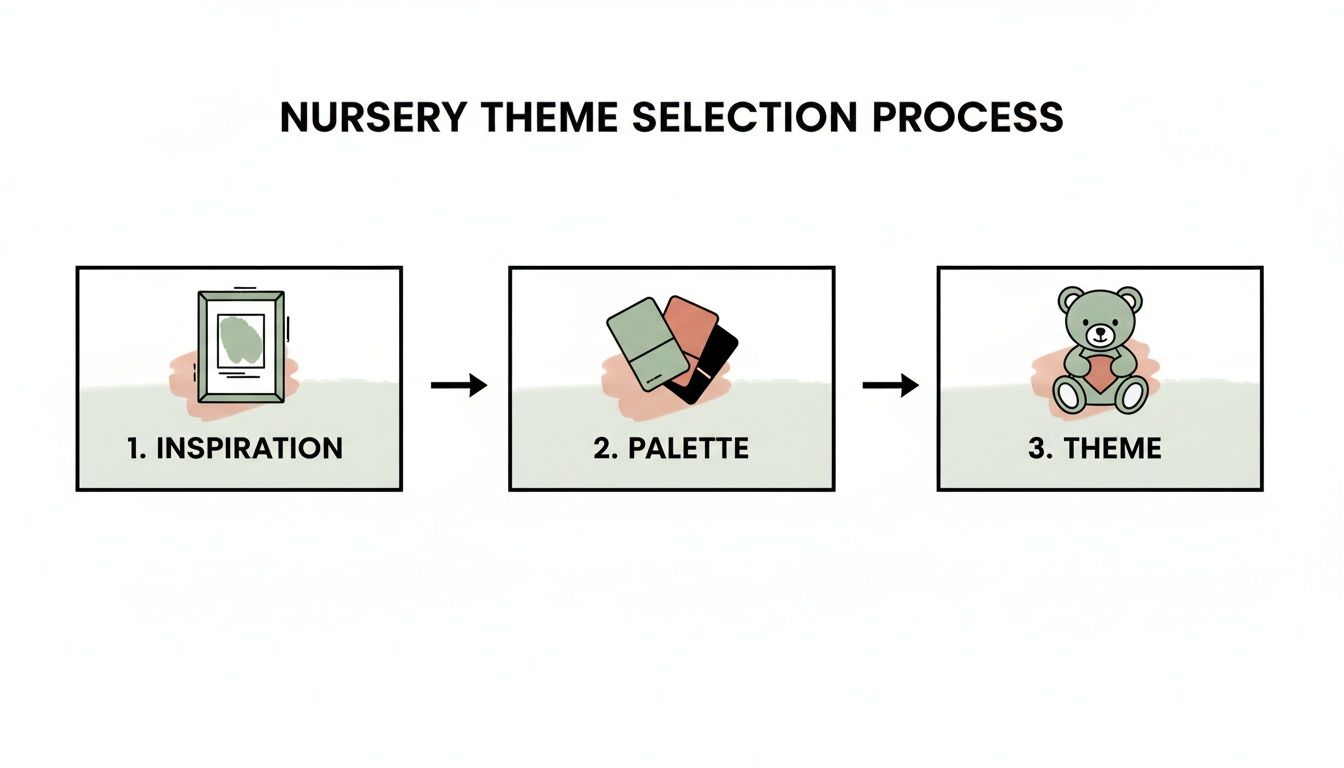
Once your inspiration solidifies into a theme, it becomes much easier to decide where key pieces of furniture and décor should go to support these zones.
- The Sleep Zone: This should be the calmest corner of the room. It just needs the cot and maybe a white noise machine. Keep this area free from distracting toys or mobiles hanging directly over the sleeping space.
- The Changing Zone: Think of this as your command centre. The changing unit should be positioned against a wall with all essentials—nappies, wipes, creams—organised right there. You should never, ever have to take a hand off your baby to reach for something.
- The Feeding and Play Zone: This is where you’ll place your cosy feeding chair, along with a small side table for your drink, phone, or a burp cloth. As your baby grows, a soft rug and some low toy baskets can transform this area into a perfect spot for cuddles and playtime.
Prioritising Non-Negotiable Safety Rules
Let's be honest: a beautiful nursery means absolutely nothing if it isn't safe. Your baby's curiosity will grow faster than you can imagine, so it's vital to baby-proof the layout right from the start, especially if there will be a curious toddler visiting their new sibling.
The most critical rule is the placement of the cot. It must be positioned away from windows, radiators, and any trailing cords from blinds or monitors. This simple step stops your baby from reaching things they shouldn't and helps regulate their temperature, as windows can get surprisingly chilly.
Peace of mind comes from knowing you've created a truly secure environment. Before adding any decorative touches, anchor all heavy furniture, cover electrical sockets, and make sure there's nothing your baby can pull down from inside the cot.
Safety should also guide your choice of window dressings. It's really wise to explore options for child and pet safe window treatments to minimise hazards. Cordless blinds are an excellent, worry-free choice for any child's room.
Creating a Practical and Efficient Flow
Once safety is sorted, you can fine-tune the layout for pure functionality. This is all about making your life easier. Imagine the path you'll walk during a middle-of-the-night nappy change. Is it clear? Can you get from the cot to the changing table without stubbing your toe on a toy left by an older sibling?
Here are a few practical tips for getting the furniture arrangement just right:
- Map Out Your Main Path: Make sure there’s a clear, wide walkway from the door to the cot and from the cot to the changing table. A tape measure is your best friend here.
- Keep Essentials Within Arm's Reach: When you’re settled in your feeding chair, can you easily reach a lamp or side table? When you're at the changing station, are fresh clothes in a nearby drawer? These little details make a huge difference.
- Use Rugs to Define Space: A soft, plush rug can anchor the feeding or play zone, visually separating it from the sleeping area while adding a welcome layer of warmth and comfort underfoot.
By blending these safety measures with a smart, zone-based layout, you create a nursery that doesn't just look beautiful but works beautifully, too. It becomes a calm, organised, and secure space where you can focus on what truly matters: cherishing those precious moments with your new baby.
Selecting Furniture and Smart Storage
Nursery furniture is really the heart of the room, the sturdy foundation where you'll build countless memories. Choosing these core pieces is all about finding that perfect blend of safety, style, and long-term value. Let's walk through picking out the essentials—a safe cot, a practical changing unit, and a comfy chair just for you. Then, we'll tackle the inevitable clutter with smart storage that keeps your calm nursery feeling just that way.
The goal here is to pick items that will serve you well in those early newborn days but will also adapt as your little one grows. Think of it as investing in your own peace of mind—these pieces will make your daily routines so much smoother.
Choosing Your Core Nursery Furniture
The big three—the cot, changing unit, and feeding chair—form the functional core of the room. Getting these right is a decision you'll be thankful for every single day.
- The Cot: This is your most important purchase, hands down. Always, always make sure it meets current UK safety standards (BS EN 716-1). Look for one with adjustable mattress heights. A higher setting will save your back when your baby is tiny, and a lower setting keeps them safely tucked in once they can sit and stand up.
- The Changing Unit: A dedicated changing station keeps all your nappy-changing bits and bobs in one organised place. So many parents opt for a sturdy chest of drawers with a changing mat on top, and for good reason! It’s a brilliant multi-functional choice that easily transitions into a regular piece of furniture for your child's room later on.
- The Feeding Chair: Trust me, you'll spend countless hours here, so comfort is everything. Whether you go for a gentle glider, a traditional rocker, or a plush armchair, make sure it has good back support and comfy armrests. A durable, easy-to-clean fabric like a polyester blend will be your best friend against the inevitable spills and spit-up.
If you enjoy a good DIY project, crafting your own accessories can be a really rewarding and budget-friendly option. For instance, using patterns for a DIY changing station lets you create something that perfectly matches your theme.
Smart Storage for a Clutter-Free Space
Babies come with a surprising amount of stuff. And when you add their things to the belongings of older children, it can feel like you're drowning in clutter. Keeping it all organised is the secret to a peaceful nursery. Smart storage isn't about hiding everything away; it’s about creating simple, accessible systems that work for you.
An organised space genuinely reduces stress and makes it easier to find what you need, especially when you're in a mad dash. You don’t need a huge room—just clever solutions that make the most of the space you have.
A well-organised nursery is a gift to your future self. By creating a designated spot for everything, you simplify clean-up and keep the room a calm and functional sanctuary, even on the most chaotic days.
Multi-Functional Pieces and Vertical Space
To get the most out of your nursery's potential, think multi-functionally and look upwards. Every piece of furniture can offer more than one purpose if you choose wisely.
- Cots with built-in drawers: These are fantastic. You can store extra bedding and sleepsuits right where you need them, which is a lifesaver during late-night changes.
- Ottomans with hidden storage: This is the perfect spot to stash extra blankets or toys, while also giving you a place to put your feet up during those long feeds.
- Wall Shelves: Floating shelves are ideal for displaying decorative items, treasured books, and special keepsakes. Placing them above the changing unit or a dresser makes use of vertical space without taking up any precious floor area.
By mixing and matching these ideas, you create layers of storage that are both practical and beautiful. You can learn more about weaving storage into a specific design, like in our guide to creating a beautiful jungle theme nursery, where baskets and shelving can really enhance the overall look.
Baskets and Bins: The Unsung Heroes
Never, ever underestimate the power of a good basket. Woven baskets, fabric bins, and stylish containers are your best friends for quick tidy-ups and for organising all those smaller items. They add lovely texture and warmth to the room while being incredibly practical.
Use them to group items together for easy access:
| Storage Solution | Best Used For |
|---|---|
| Large Woven Baskets | Bulkier items like blankets, stuffed animals, and laundry. |
| Small Fabric Bins | Nappies, wipes, and creams on the changing unit shelves. |
| Drawer Dividers | Sorting tiny clothes like socks, vests, and bibs inside drawers. |
| Wall-Mounted Caddies | Storing books with their covers facing out, making them inviting for story time. |
These simple systems are easy for you to maintain now and will eventually be easy for your toddler to help with during clean-up time. By choosing your furniture and storage with a bit of foresight, you’ll build a nursery that is not only ready for your baby but also ready to adapt and grow right along with your family.
Creating a Cosy Atmosphere with Lighting and Textiles
Furniture gives a nursery its bones, but it’s the lighting and textiles that give it a soul. This is where you create that soft, cosy atmosphere perfect for peaceful sleep and happy cuddles. Getting this layering right is how you turn a simple room into a true sanctuary for you and your baby.
You’ll be spending a lot of time in this room at all hours, so the lighting needs to be flexible. A single, harsh overhead light just won’t cut it for those 3 am feeds. Instead, think in layers to create a gentle, adaptable ambiance.
Layering Light for a Soothing Ambiance
The idea is to have lighting options that can go from bright and playful during the day to soft and sleepy at night. This simple approach helps support your baby’s developing circadian rhythms and makes those late-night check-ins far less disruptive.
- Main Light: Start with a central ceiling fixture, but whatever you choose, make sure it’s on a dimmer switch. This is non-negotiable. It gives you full control, letting you flood the room with light when you need it or dial it right down for a calming evening mood.
- Task Lighting: A small, soft-glow lamp on a side table next to your feeding chair is an absolute must. It provides just enough light to see what you're doing without startling a sleepy baby fully awake.
- Nightlight: A gentle, warm-toned nightlight offers a continuous, low level of light that’s reassuring and helps you navigate the room safely in the dark. Opt for one with a soft amber or red hue, as these colours are less likely to interfere with sleep.
A layered lighting scheme is one of the most effective ways to make a nursery feel calming and functional. Being able to adjust the brightness instantly helps you match the room's atmosphere to your baby's needs, whether it's playtime or bedtime.
Choosing Soft and Safe Textiles
Textiles are how you add warmth, texture, and pure comfort. From the cot sheets to the rug on the floor, every fabric you choose contributes to the room's overall feel. Always prioritise soft, natural, and baby-safe materials that are kind to delicate skin.
Organic cotton, linen, and bamboo are all fantastic choices for bedding as they are breathable and hypoallergenic. When it comes to texture, a plush, high-pile rug feels lovely underfoot and does double duty by absorbing sound, which helps keep the room quiet. It's also perfect for carving out a cosy little area for tummy time. You can learn more about how different elements can influence textile choices by exploring ideas for vintage print art, which often pairs beautifully with natural fabrics.
Blackout curtains are a game-changer for so many parents. By blocking out streetlights and early morning sun, they create a dark, sleep-friendly environment that can make a huge difference in encouraging longer naps and better nighttime sleep. This one addition can be a lifesaver when you're trying to establish healthy sleep habits from the start.
Adding Personality with Wall Art and Final Touches
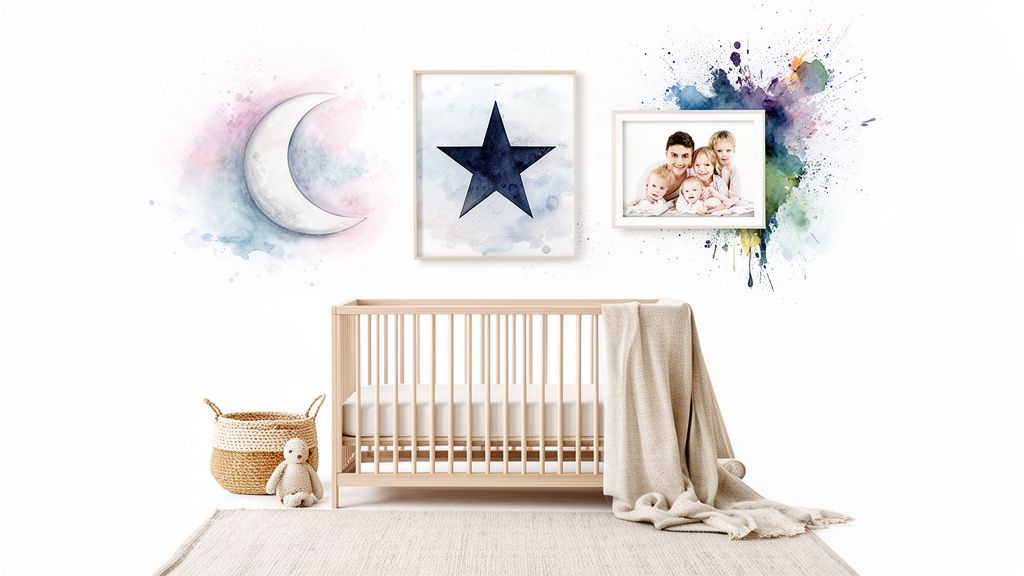
Now that the main pieces are in place, it's time for my favourite part: adding that final, magical layer that truly brings a nursery to life. This is where you get to sprinkle in your family’s unique story and transform a well-designed room into a warm, personal haven for your little one.
A gallery wall is a fantastic way to do this. It can easily become the heart of the room, pulling your theme and colour palette together into one beautiful focal point.
Curating Your Nursery Gallery Wall
Don't be intimidated by the idea of creating a gallery wall! It's much simpler than it seems and is all about finding a balance that feels right to you. The goal isn’t perfect symmetry, but a lovely, harmonious display that makes you smile every time you see it.
A gallery wall is a chance to tell a story. You could gather prints that fit your theme—maybe a bold superstar print alongside delicate watercolour animals—or mix in abstract art, sweet quotes, and even different textures like a small woven hanging. It’s this combination that makes the display feel so rich and special.
A great tip I always share is to lay all your frames out on the floor before you even think about picking up a hammer. This lets you shuffle things around and play with the arrangement until it looks just right. As a rule of thumb, try to leave about 2-3 inches between each frame so the display feels airy, not crowded.
A gallery wall is more than just decoration; it's a visual love letter to your new baby. Mix prints with personal photos and treasured keepsakes to create a display that feels deeply meaningful and truly one-of-a-kind.
A Quick Guide to Gallery Wall Layouts
There are so many ways to arrange your art. To help you get started, I've put together a few popular styles that work wonderfully in a nursery setting.
Gallery Wall Layout Planner
Planning your layout can make the whole process much smoother. Here's a quick breakdown of common styles to help you find the best fit for your space and art collection.
| Layout Style | Best For | Pro Tip |
|---|---|---|
| Grid Layout | A clean, modern, and organised look. Works best with frames of the same size and style. | A spirit level and measuring tape are your best friends here! This style needs precision but gives you a very polished result. |
| Organic Cluster | Creating a more relaxed, eclectic, and whimsical feel. Perfect for mixing different frame sizes, shapes, and styles. | Start with your largest piece in the centre or slightly off-centre, then build the smaller frames outwards around it. |
| Linear or Ledge | Displaying art on floating shelves. It gives you lots of flexibility to swap prints and add small objects easily. | Overlap some of the frames slightly. This creates a casual, layered look that adds lovely depth and visual interest. |
Choosing a layout ahead of time helps ensure the final result is balanced and cohesive, even if you're mixing and matching different pieces.
Personal Touches Beyond the Gallery Wall
While a gallery wall makes a fantastic centrepiece, it’s often the smaller, sentimental details that fill the space with the most warmth.
Think about including some of these meaningful additions:
- Custom Name Art: A beautiful print of your baby’s name is a classic touch that makes the room theirs instantly.
- Cherished Family Photos: A few black-and-white photos of parents, siblings, grandparents, or even beloved family pets can surround your baby with loving, familiar faces.
- Handmade Heirlooms: That special knitted blanket from a grandparent or a handmade mobile shouldn't be tucked away. Displaying these items adds immense sentimental value.
By thoughtfully combining curated art with these deeply personal pieces, you create a nursery that’s not just beautifully decorated, but a true reflection of your family's love and excitement. For more inspiration, you can explore a wide range of nursery wall art ideas to find the perfect prints to start your collection.
Got Questions About Decorating a Nursery?
Even with the most organised plan, decorating a nursery is bound to bring up a few questions. It’s a big project! Feeling confident in your choices is key, so we've pulled together answers to some of the queries we hear most often from parents.
When Is the Best Time to Start?
Most parents find the second trimester is the sweet spot for kicking off the nursery project. Morning sickness has hopefully waved goodbye, and you still have plenty of energy to tackle things like painting and assembling furniture.
This timing also gives you a comfortable buffer, making sure the room is all ready to go, even if your little one decides to make an early appearance. Waiting until after your baby shower is also a smart move. You can get the big jobs like painting done first, then add all the lovely decorative touches once you see what gifts you’ve received.
How Can I Make a Small Nursery Feel Bigger?
You don't need a massive room to create a beautiful space. A few clever design tricks can make even the most compact nursery feel wonderfully airy and spacious.
- Go Vertical: Think upwards! Use floating shelves and tall, narrow bookcases to draw the eye up and free up precious floor space.
- Choose Light Colours: Soft, light paint colours are your best friend in a small room. Think off-white, pale grey, or gentle pastels. They're brilliant at reflecting light and making the space feel larger.
- Use Mirrors: A well-placed mirror is a classic trick for a reason. It can visually double the space and bounce light around, creating a much brighter, more open atmosphere.
What Kind of Paint Is Safest for a Nursery?
When it comes to paint, safety is everything. Always look for paint that is labelled as zero-VOC (Volatile Organic Compounds). These compounds can release gases that aren't healthy to breathe, so choosing a zero-VOC formula ensures much better air quality for your baby. Lots of brands now offer specific "nursery-safe" ranges.
For more detailed answers on everything from product safety to delivery times, you can explore our full list of frequently asked questions.
Ready to add that perfect finishing touch to your nursery walls? Discover beautiful, timeless, and personal prints at Pompom Prints. Explore our collections and find the art that tells your family's story at https://pompomprints.com.